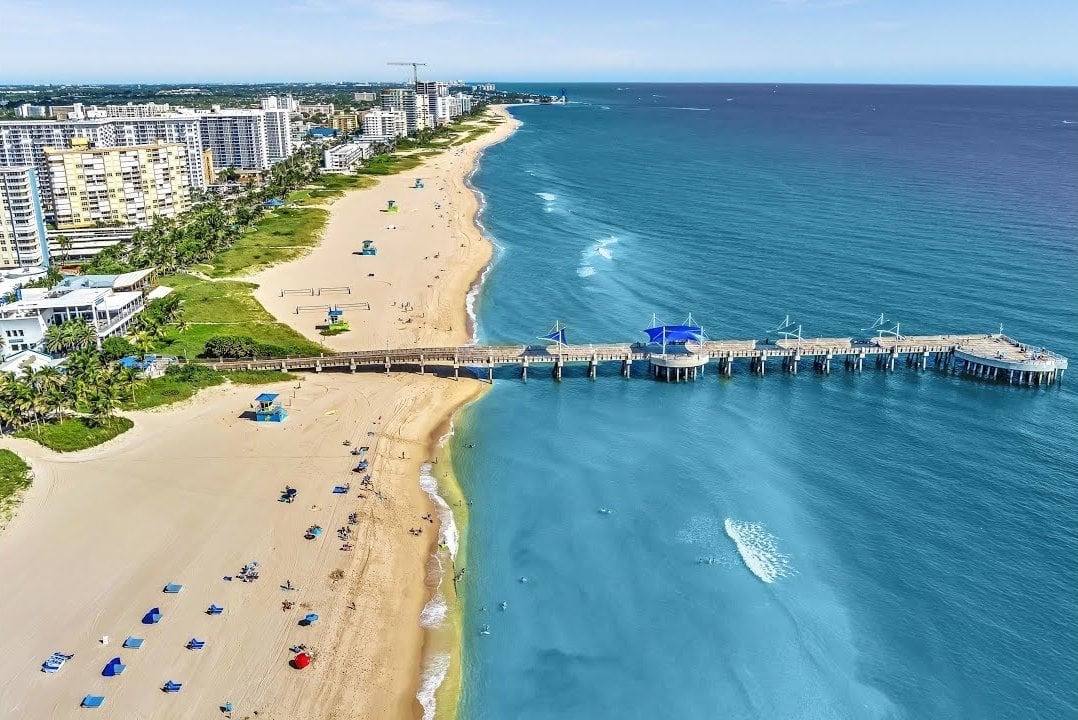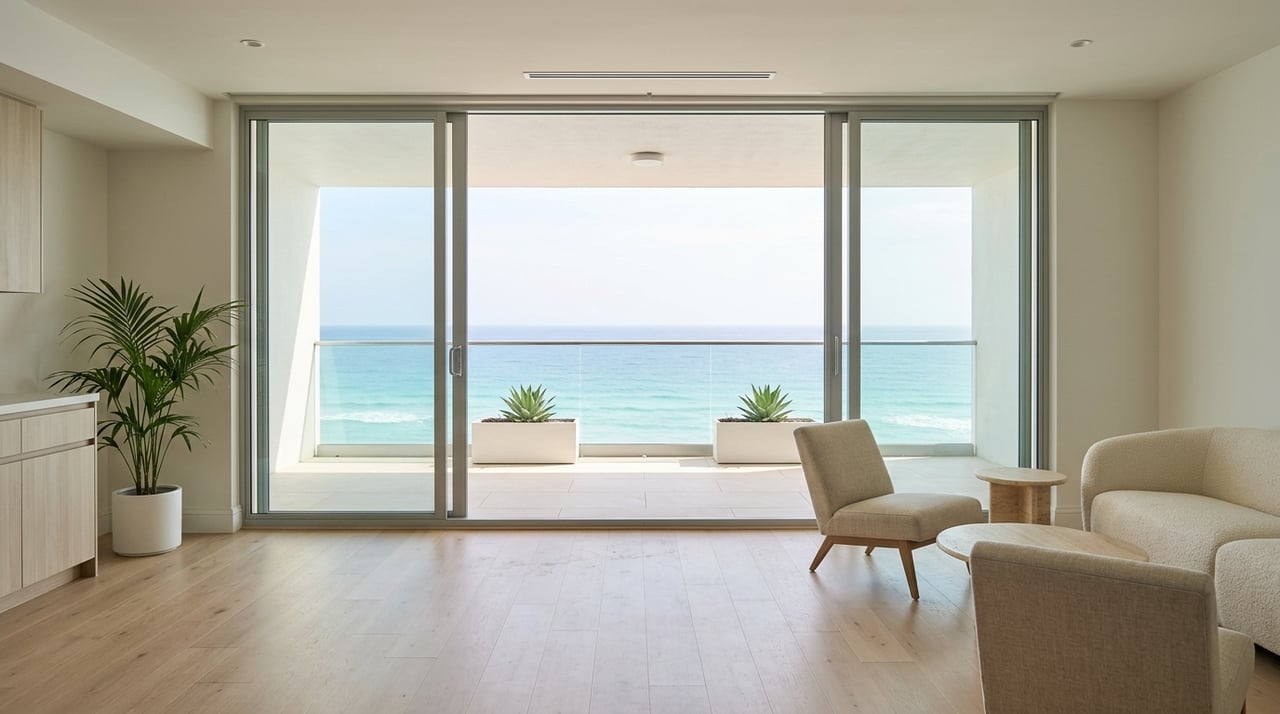
By mid-July the sand in front of your building has more yellow or red stakes than footprints. The stakes appear before dawn, planted by a survey crew that has already walked past your seawall while you were asleep. If you live on the ocean side of A1A, you have probably noticed the small changes in your own house too: the pool deck sconces are darker than they were in February, the sliders stay curtained after sunset, and the guy who runs the association's exterior lighting has stopped answering emails until October.
This is the trade every oceanfront owner on Hillsboro Mile makes without always thinking about it. The town sits on one of the highest densities of sea turtle nests per mile on the East Coast of Florida, and from March 1 through October 31 the rules of the beach in front of your home are not really your rules. They belong to the loggerheads, greens, and leatherbacks that nest here during a season that officially runs March 1 through October 31, with leatherbacks, loggerheads, and green sea turtles all coming ashore. July and August are when the earlier nests start hatching, which is why the second half of summer feels different from the first.
The Trade You Made At Closing
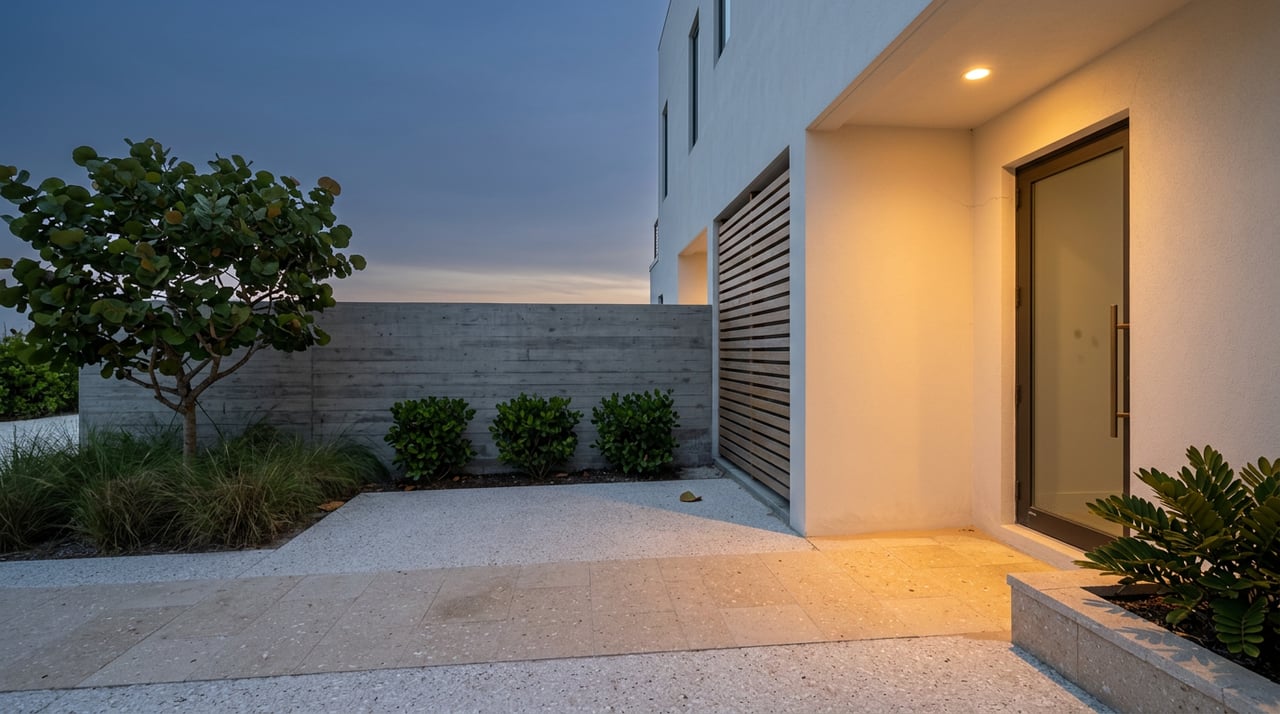
Ordinance 232 is the reason your exterior lighting looks the way it does. The town passed the Turtle Lighting Ordinance on September 4, 2007, to protect nesting habitat, nesting females, and hatchlings, and no lighting may be installed, maintained, or illuminated on public or private property that would directly illuminate the beach from sunset to sunup during the March 1 through October 31 nesting period. That is broader than most new owners assume. It reaches interior lights visible through beach-facing windows, decorative up-lights around a pool cage, and any accent fixture whose point source can be seen from the sand.
The practical reading, once you have lived through a full season, comes down to a handful of habits:
- Exterior fixtures must be designed and positioned so the point source is not directly visible from the beach, and parking-lot lighting has to use low-profile luminaires that do not directly or indirectly illuminate the sand.
- Floodlights, up-lights, and spotlights used for decorative, recreational, or accent purposes cannot be directly visible from the beach during nesting season.
- Beach chairs, umbrellas, and cabanas that could entrap turtles or interfere with nesting habitat are prohibited overnight on the beach.
- Motorized vehicles on the beach are prohibited from sunset to sunrise during nesting season, with narrow exceptions for law enforcement and permitted conservation work.
The reason the ordinance is written this tightly is straightforward. Hatchlings emerging from nests at night are strongly attracted to light sources along the beach, and they will move toward streetlights, porch lights, or interior lighting visible through windows and away from the sanctuary of the ocean, where they succumb to predators, exhaustion, drying in the morning sun, or strikes by cars in nearby lots and roads. That is not rhetorical framing. A single light left on near a nesting beach can misdirect and kill hundreds of hatchlings. Your dining room chandelier, aimed the wrong direction, is a policy problem.
Why July Feels Different Than May
The season has a rhythm that is worth knowing if only because it explains why some weeks the beach is quiet and other weeks the patrol trucks are out before six. Broward County's monitoring effort is unusually intensive: the Broward County Sea Turtle Conservation Program patrols 24 miles of beach every morning from March 1 through October 31 and identifies upwards of 3,000 or more nests each season. The county has been trending up, not down. Broward posted an all-time record of 3,647 nests in 2019, and in 2021 leatherbacks nearly doubled their previous local record with 86 nests, contributing to a season total of 3,099 nests alongside 2,548 loggerhead and 463 green turtle nests. Last year the county logged about 3,353 nests on 39 monitored kilometers of beach in 2025, and the statewide picture heading into this summer is strong. As of the FWC's late-spring update, loggerheads and leatherbacks were both outpacing recent record years, with the 2026 loggerhead count already at 1,450, roughly 82% better than the same point in 2025.
For an oceanfront resident, what matters is which species is doing what, and when.
Species | Peak Nesting Window | What You'll See On The Sand |
|---|---|---|
Leatherback | March through May | Wide, tractor-tread crawl marks; nests marked early in the season |
Loggerhead | May through August | The most common stake clusters; heavy activity in June and July |
Green | June through September | Larger body pits; later-season nests still incubating in October |
Incubation runs roughly two months, which is why the yellow stakes you noticed in May are the ones producing hatchlings in July, and the June nests will hatch through August and into September. The back half of the season is when the light discipline matters most, because a nest laid in front of your building in early June is the nest whose hatchlings are looking for the horizon on a humid Thursday night in August.
The Once-A-Month Saturday
If summer on the Mile has a public event, it is the lighthouse tour. The Hillsboro Inlet Lighthouse itself is not casually accessible: it sits on an active U.S. Coast Guard base and is normally not open to the public, though public tours are scheduled monthly. That once-a-month rhythm is worth planning around because seats do not scale.
A few things to know before you drive down to the marina:
- The tour consists of a boat ride to and from the lighthouse grounds, a walk of the grounds, and the climb, with boats departing on the hour from the departing docks and on the half hour from the USCG docks at the lighthouse.
- Seating is first-come-first-serve, arriving 15 to 20 minutes early is recommended, and in peak season boat seating fills quickly.
- Only close-toed shoes are permitted, children must be at least four feet tall, and the ticket includes membership in the Hillsboro Lighthouse Preservation Society.
- There are 175 steps on the spiral staircase to the top.
What you are climbing toward is not a replica. The Hillsboro Lighthouse was commissioned in 1907, has a candlepower of 5.5 million, flashes white every 20 seconds, and its beacon can be seen a distance of 28 miles. The optic inside is the reason preservationists care: Hillsboro Inlet's lens is one of the few Fresnel lenses still actively rotating, and the Hillsboro Lighthouse Preservation Society succeeded in restoring and repairing the original Fresnel lens, which is now reactivated inside the lighthouse. On non-tour days you can still get closer to the story than most residents realize. The HLPS Museum sits in Roy L. Rogers Family Park, where visitors can learn more about the lighthouse's history, and the museum is open every day from 10 a.m. to 3 p.m.
If You Find A Disoriented Hatchling
This is the part of the season most new owners are not prepared for. Even with the town's ordinance in effect, coastal light pollution is not fully solved. Broward County continues to experience relatively high levels of hatchling disorientation from coastal light pollution compared to naturally dark beaches, and volunteer-based programs including Sea Turtle Oversight Protection, the South Florida Audubon Society, and Sea Turtle Awareness Rescue and Stranding redirect thousands of disorientated hatchlings annually. That work happens on the sand in front of buildings whose owners are asleep.
If you find a turtle or hatchling in trouble, the town's number for a sea turtle in distress is 954.328.0580. Do not push an injured turtle back into the water, do not photograph it with flash, and do not walk the nest line with a flashlight. The county surveyors have already marked the active nests; if you see stakes moving before dawn, that is the crew doing the work.
A short list of things not to do during hatch weeks, gathered from the town's own guidance and long-standing county practice: refill the pit you dug for the kids before you leave the beach, break down chairs and umbrellas at sunset instead of at bedtime, and refrain from leaving food out for foxes, raccoons, and other wild animals, which disrupt nesting and cost hatchlings.
A Quieter Summer, By Design
The overall picture, if you live here, is that the second half of the calendar is quieter and darker than the first, and that is a feature. The town's own event calendar reflects the mood; a check of the official site this week shows no published municipal events for the month, which for a barrier-island community in July is exactly right. Roí at the Hillsboro Beach Resort keeps the dinner options close, and the 99-room property opened in October 2021 on Hillsboro Mile with complimentary bikes, kayaks, Sunday beach yoga, chairs and towels, and telescopes for stargazing. Those telescopes work well in a town that has chosen, by ordinance, to be legally dark from March through October.
For anyone who bought here because the beach felt more private than the rest of coastal Broward, sea turtle season is the reason it still does. The rules that keep your porch light angled downward are the same rules that keep the beach empty at sunset and the horizon uninterrupted before dawn. That is the trade, and on most July mornings it looks like a good one.
If you're weighing what a home on this stretch actually involves through the full calendar, or thinking about the timing of a listing around the season's rhythms, Patricia Davila is happy to talk it through. Schedule your concierge consultation and we'll map the details around your building, your block, and the months that matter most.